

Always‑On Culture: How to Set Digital Boundaries Without Harming Your Career
September 14, 2026
Deepfakes and Digital Wellbeing: When Artificial Intelligence Blurs Reality
September 14, 2026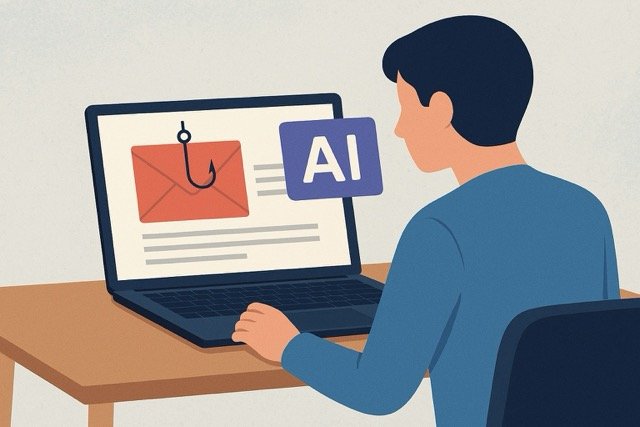
Artificial intelligence (AI) has rapidly become a powerful ally in the modern workplace. From automating tasks to generating content in seconds, AI tools promise efficiency, creativity, and productivity. However, as with many technological advances, the same tools that empower users can also be exploited—particularly by cybercriminals.
One of the most concerning developments in recent years is AI-powered phishing, a new generation of social engineering attacks that are more convincing, personalized, and psychologically manipulative than ever before. This evolution poses not only a cybersecurity risk, but a serious digital wellbeing challenge—affecting trust, mental clarity, and decision-making in digital spaces.
What Is AI Phishing?
AI phishing refers to phishing and social engineering attacks that are enhanced or generated using artificial intelligence, especially generative AI tools. These systems can create highly realistic text, images, audio, and even video content—making fraudulent messages far harder to detect.
Unlike traditional phishing attempts, which often included obvious spelling mistakes or generic messaging, AI-powered phishing attacks are:
- Linguistically polished and natural
- Highly personalized
- Emotionally persuasive
- Visually convincing
As a result, even digitally experienced users can fall victim.
How Generative AI Is Used by Cybercriminals
1. Perfectly Written Messages
Generative AI excels at producing fluent, human-like language. Cybercriminals can now:
- Mimic the tone and writing style of trusted colleagues
- Imitate official communications from banks, universities, or employers
- Eliminate spelling and grammatical errors that once raised red flags
This creates messages that “feel” legitimate, lowering a recipient’s psychological defenses.
2. Realistic Visual and Branding Content
AI image-generation tools allow attackers to:
- Recreate company logos
- Design realistic email headers
- Produce convincing website mockups
These visual cues exploit our tendency to trust familiar brands and visuals—an important aspect of cognitive trust in digital environments.
3. Scalable and Targeted Attacks
AI enables cybercriminals to generate thousands of customized phishing messages in minutes. By combining AI with leaked personal data, attackers can tailor messages based on:
- Job roles
- Recent activities
- Organizational hierarchies
- Emotional triggers (urgency, fear, authority)
This makes attacks both scalable and deeply personal.
Why AI Phishing Is a Digital Wellbeing Issue
While phishing is often discussed purely as a technical or security problem, AI phishing has significant implications for digital wellbeing:
Loss of Trust
Repeated exposure to hyper-realistic scams can make users overly suspicious, reducing trust in legitimate digital communication.
Cognitive Overload
Constant vigilance against sophisticated scams increases mental fatigue and decision stress, especially for employees handling high volumes of digital communication.
Emotional Manipulation
AI phishing often relies on urgency, fear, or authority—emotions that impair critical thinking and increase anxiety.
Fear of Making Mistakes
Victims may experience guilt, shame, and self-doubt, which can discourage reporting incidents and worsen psychological wellbeing.
Common AI Phishing Scenarios to Watch For
- Urgent requests for login credentials or financial information
- Emails that appear to come from senior management or IT support
- Messages that pressure you to “act immediately” or “avoid consequences”
- Unexpected file downloads or invoice attachments
- Requests that break normal communication or verification procedures
If a message feels urgent and unusual, that combination alone is a major warning sign.
How to Protect Yourself and Support Digital Wellbeing
1. Stop, Look, and Think
Before responding to any unexpected message:
- Pause
- Evaluate the request
- Verify the sender through another channel
Slowing down is one of the most effective defenses against social engineering.
2. Question Emotional Triggers
AI phishing often manipulates:
- Fear (“Your account will be suspended”)
- Urgency (“Immediate action required”)
- Authority (“This request comes from management”)
Recognizing these patterns helps restore rational decision-making.
3. Verify Requests for Sensitive Information
Legitimate organizations rarely:
- Ask for passwords via email
- Demand immediate action without confirmation
- Penalize you for taking time to verify
When in doubt, independently contact the organization.
4. Build Digital Awareness, Not Just Technical Skills
Digital wellbeing involves:
- Critical thinking
- Emotional regulation
- Healthy skepticism
- Confidence in digital decision-making
Training should address psychological manipulation—not only security rules.
AI, Cybersecurity, and the Future of Digital Wellbeing
As AI continues to evolve, phishing attacks will become even more immersive—potentially involving deepfake voice messages or video impersonations. This reality requires a shift in mindset:
Cybersecurity is no longer just about technology; it is about human cognition, behavior, and wellbeing.
By fostering awareness, slowing down digital interactions, and strengthening critical thinking, individuals and organizations can protect both their data and their mental resilience.
Final Thoughts
AI has introduced extraordinary benefits to modern life—but it has also raised the stakes in cybercrime. AI-powered phishing removes many of the traditional warning signs people were trained to recognize, making awareness and mindfulness more important than ever.
Protecting your digital wellbeing means staying alert, questioning urgency, and remembering one simple rule:
Always stop, look, and think before taking action online.