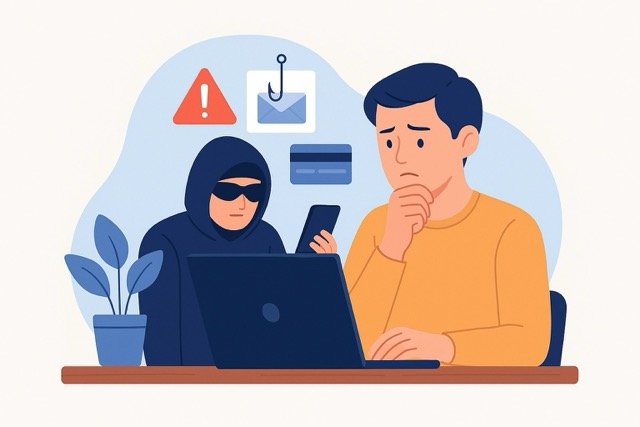

Breaking Free from Screens: Understanding and Tackling Digital Addiction
February 20, 2026
Digital Detox for AI Overload: How to Stay Human in the Age of ChatGPT
February 20, 2026
Why Mental Health Matters
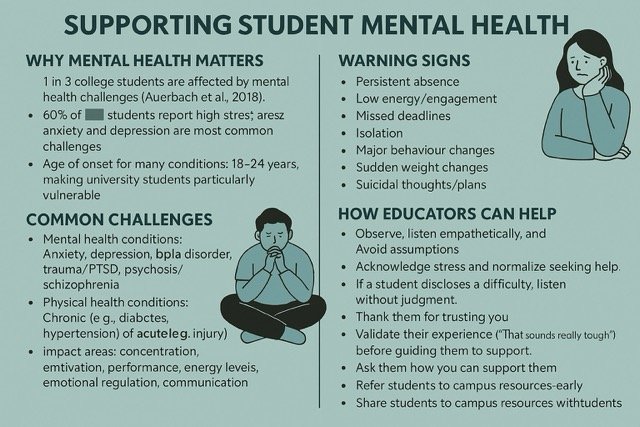
University life is often portrayed as exciting and full of opportunities, but behind the scenes, many students struggle with mental health challenges. Research shows that 1 in 3 college students experience mental health issues(Auerbach et al., 2018). 60% of students report high stress, with anxiety and depression being the most common concerns.
The age of onset for many mental health conditions falls between 18–24 years, making university students particularly vulnerable. These challenges can affect academic performance, relationships, and overall quality of life.
Common Challenges
Students may face a mix of mental and physical health issues:
- Mental Health Conditions: Anxiety, depression, bipolar disorder, trauma/PTSD, psychosis, schizophrenia.
- Physical Health Conditions: Chronic illnesses (e.g., diabetes, hypertension) or acute injuries.
- Impact Areas: Concentration, motivation, academic performance, energy levels, emotional regulation, and communication.
Warning Signs to Watch For
Educators and peers should be alert to these indicators:
- Persistent absence from classes
- Low energy or engagement
- Missed deadlines
- Social isolation
- Major behavior changes
- Sudden weight fluctuations
- Suicidal thoughts or plans
How Educators Can Help
Supporting students starts with empathy and awareness:
- Observe and Listen: Avoid assumptions; listen without judgment.
- Normalize Help-Seeking: Acknowledge stress and encourage reaching out.
- Validate Experiences: Use phrases like “That sounds really tough” before offering guidance.
- Offer Support: Ask, “How can I support you?”
- Refer Early: Connect students with campus resources and wellness events.
- Encourage Self-Care: Sleep, nutrition, hobbies, and breaks during overwhelming moments.
- Use Positive Language: Combine encouragement with constructive feedback.
Useful Techniques During a Crisis
If a student is in distress:
- Stay Calm & Present: Speak slowly and reassure: “You’re safe, I’m here with you.”
- Guide Breathing: “Inhale through your nose for 4 counts, exhale through your mouth for 6.”
- Offer Space & Options: Suggest stepping outside, getting water, or sitting somewhere quiet.
- Gentle Reassurance: Use grounding phrases like “You’re safe right now.”
Additional Strategies for Digital Wellbeing
In today’s hyper-connected world, digital habits can amplify stress and anxiety. Here are practical tips for students:
- Set Screen Time Limits: Use apps to monitor and reduce excessive scrolling.
- Digital Detox: Schedule short breaks from social media to recharge mentally.
- Mindful Tech Use: Turn off notifications during study hours to improve focus.
- Leverage Mental Health Apps: Tools like Headspace or Calm can support relaxation and mindfulness.
Campus and Online Resources
- University Counseling Centers: Most campuses offer free or low-cost counseling services.
- Peer Support Groups: Join student-led mental health clubs or online forums.
- Emergency Contacts: Save local crisis helplines and campus security numbers.
- DigitalWellbeingHub.com Resources: Explore guides, self-assessment tools, and expert articles.
Call to Action
Mental health matters—your awareness and support can make a life-changing difference. Share this article with colleagues and students, and explore more resources at DigitalWellbeingHub.com.