


Screen Time for Grandparents: Staying Connected Without Overwhelm
September 14, 2026
Accessibility in Tech: How Everyone Can Use Devices with Ease
September 14, 2026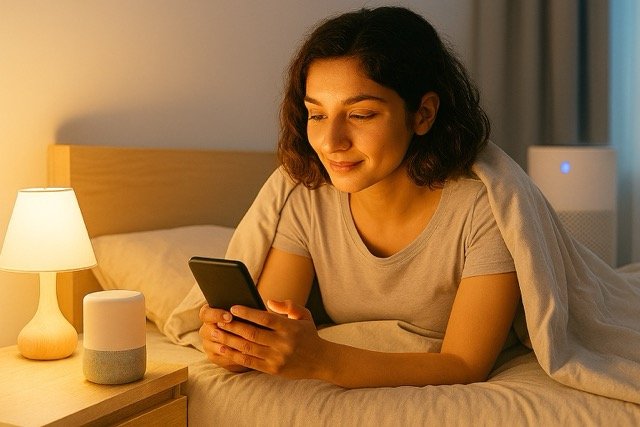
You want to wake up clear‑headed, not foggy. You’ve tried night mode, a meditation app, maybe even white noise—but your bedtime still drifts later, and your sleep doesn’t feel truly restorative.
Here’s the truth: a handful of tech and sleep tips—used deliberately, for the final hour or two of your day—can dramatically improve how fast you fall asleep, how deeply you stay asleep, and how refreshed you feel tomorrow.
In this expert-led guide, you’ll learn the science, the pitfalls, and a practical, step-by-step evening routine that actually works—without gimmicks, and without giving up every device you love.
TL;DR: Your evening game plan (and why it works)
- Limit screens 60–90 minutes before lights‑out; blue‑enriched light and dopamine‑driving content both delay melatonin and keep the brain “up”.
- Night mode + lower brightness beats night mode alone; dim the screen aggressively and warm the colour temperature if you must look briefly.
- Swap scrolling for audio (calming music or narrated stories) for 30–45 minutes; these consistently reduce sleep disturbance in trials.
- Set the room right: cool, quiet, dark—and ventilated; aim for CO₂ < 800–1000 ppm, temperature ~18–20°C, humidity ~40–60%. ]
- No‑scroll rituals: use a wind‑down alarm, put the phone outside the bedroom, and replace the “last check” with one calming habit.
Now, let’s dig into the details (and the science) so you can personalise this to your life.
How screens affect sleep
Blue light: melatonin’s natural “off” switch
Evening exposure to short‑wavelength (blue‑enriched) light suppresses melatonin, delays your body clock, and can lighten sleep—effects repeatedly demonstrated in laboratory and field studies.
A recent study comparing blue vs red LEDs confirms blue’s stronger suppression of melatonin during late‑evening exposure, especially in younger adults and men.
Smartphones are a perfect storm: they’re self‑luminous, held close to the eyes, and often used at higher brightness, which boosts melatonin suppression. Quantitative analyses of circadian illuminance reveal that typical smartphone screens at night can measurably suppress melatonin, particularly in brighter rooms or at higher brightness settings.
It’s not just the spectrum—content matters too
Beyond light, screens are cognitively and dopaminergically stimulating: tapping, swiping, news or social feeds, gaming, and “just one more” video keep the brain engaged when it should be winding down. This arousal undermines the parasympathetic shift needed for sleep onset, even when filters reduce blue light.
Large adult cohort data (122,058 participants) link screen use in the hour before bed to poorer sleep quality and shorter sleep duration, with stronger effects in evening chronotypes (night owls).
Adolescents vs adults: similar light effects, different recovery
Controlled sleep‑lab studies show smartphone reading without a blue‑light filter immediately reduces melatonin in both adolescents and young adults; adults tend to recover more slowly, still showing reduced melatonin at bedtime. Recommendation: avoid smartphone use for the last hour before sleep for both groups.
Night mode & brightness strategies
Why “night mode” alone is not enough
Warm colour displays (Night Shift/blue‑filter modes) do reduce short‑wavelength output—but studies show melatonin is still suppressed when brightness remains high. In other words, spectrum shift without dimming isn’t sufficient.
A widely cited iPad experiment found that adjusting spectral composition without lowering intensity “may be insufficient” to avoid melatonin suppression; a dim, low‑blue condition prevented suppression, highlighting the combined importance of colour andbrightness.
Practical settings that work in real life
- Turn on Night Mode / Night Shift (warmest setting) and reduce brightness to the lowest readable level if you must glance at a device in the last hour.
- Use red‑biased lamps or low‑blue bulbs for late‑evening ambient light; red wavelengths are comparatively neutral to the circadian system.
- Prefer paper or e‑ink for late reading; e‑ink is not self‑luminous and avoids the light exposure problem.
- Set a wind‑down alarm 60–90 minutes before bed; when it goes off, shift from screens to analogue or audio activities (see next section). NHS guidance endorses at least one hour screen‑free before bedtime.

Smart control via app, voice, or touch
Works with Apple HomeKit, Alexa & Google Assistant
One-touch control (works without Wi-Fi)
Soft, eye-friendly light with dual lampshade
Adjustable white (2700–6500K) & 16M colours
Dimmable brightness (1–100%)
Schedules & timers via app
Compact design, 300 lumens, 6W
Audio for relaxation (soundscapes, music)
If silence feels too quiet, the right audio can be a sleep ally—especially for the last 30–45 minutes.
What the evidence says
- Narrated sleep stories & calming music: In a multi‑arm randomised pilot (working adults with poor sleep), app‑based music and narrated stories significantly reduced sleep disturbance versus waitlist, with high adherence and satisfaction.
- Music meta‑analyses: Reviews in clinical populations suggest moderate improvements in subjective sleep quality when music is used consistently across weeks. Optimal choices are slow tempo (60–80 bpm), instrumental, simple melodies at comfortable volumes.
- Noise colours (white/pink/brown): Evidence is mixed. Harvard Health notes white noise can mask disruptive sounds but may interrupt sleep stages or be irritating if loud; pink noise may enhance deep sleep under controlled timing, though results vary. Keep volume modest and consider timed playback.
- Pink noise during naps showed no immediate alertness advantage over quiet in a small NASA crossover study—reminding us effects can be context‑specific.
How to use audio well
- Choose calm, steady sound: instrumental ambient, gentle classical, or narrated stories designed for sleep.
- 30–45 minutes max as you wind down; set a sleep timer so audio fades after you drift off.
- Volume matters: keep it below the conversational level; loud, constant noise can fragment sleep.
- Sleep Headphones? Prefer open air or soft speakers; in‑ear devices may be uncomfortable or unsafe if worn all night. (Clinical guidelines generally prioritise safety and low volume.)
Consider These Gadgets
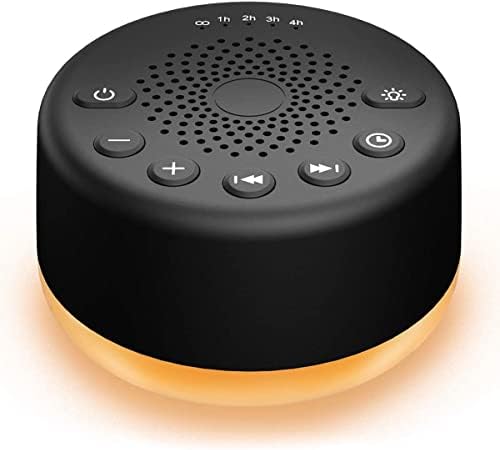
- 【White Noise & Soothing Sounds 】Easysleep white noise machine has wh…
- 【Great Sleep Machine】Easysleep sleep sound machine helps you and you…
- 【5 Timer & Memory Functions】5 timer options: 1h/ 2h/ 3h/ 4h and loop…
- 【4 Modes Warm Night Light & Manually ON/OFF】4 brightness levels with…

- 𝗖𝗢𝗠𝗣𝗔𝗖𝗧 𝗬𝗘𝗧 𝗣𝗢𝗪𝗘𝗥𝗙𝗨𝗟 – The Dreamegg Sleep Lite D11Max is a portable …
- 𝗟𝗢𝗡𝗚-𝗟𝗔𝗦𝗧𝗜𝗡𝗚 𝗕𝗔𝗧𝗧𝗘𝗥𝗬 𝗙𝗢𝗥 𝗗𝗔𝗬 & 𝗡𝗜𝗚𝗛𝗧 𝗨𝗦𝗘 – Everything Sleep Lite D11…
- 𝗨𝗟𝗧𝗥𝗔 𝗣𝗢𝗥𝗧𝗔𝗕𝗟𝗘 𝗔𝗡𝗗 𝗖𝗢𝗥𝗗𝗟𝗘𝗦𝗦 – Enjoy better sleep anywhere with the w…
- 𝗕𝗔𝗕𝗜𝗘𝗦 𝗟𝗢𝗩𝗘, 𝗣𝗔𝗥𝗘𝗡𝗧𝗦 𝗣𝗥𝗘𝗙𝗘𝗥 – It is a soothing sleep aid for babies …
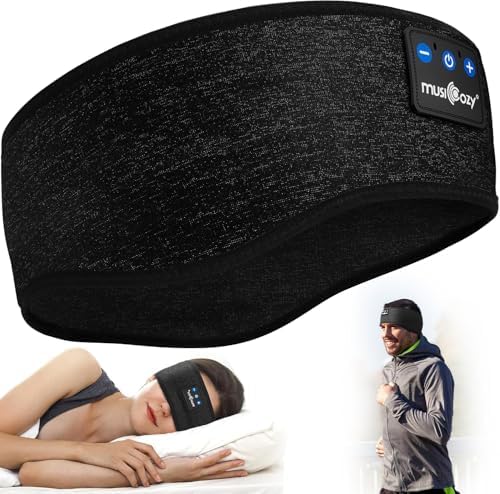
- ✳️【Sleep Headphones for Side Sleepers – Zero Pressure Points】Unlike …
- 🌥️【Headband Headphones That Stay in Place All Night】The elastic, one…
- 🎼 【Bluetooth Headband with Sleep‑Optimised Volume & 16+ Hour Battery…
- 💦【Breathable, Soft & Washable – Fresh Headband Earphones Every Night…
No‑scroll rituals 60 minutes before bed
You’re not just fighting light—you’re replacing an easy habit (phones) with calming routines that cue the brain for sleep.
The routine (simple, repeatable)
- Wind‑down alarm goes off 60–90 minutes before bed; phones go on Do Not Disturb, and leave the bedroom until lights‑out.
- Analogue activities: a printed book, journaling, stretching, a warm shower, or gentle puzzles—all low‑arousal, non‑screen. NHS guidance emphasises a consistent wind‑down and screen‑free hour.
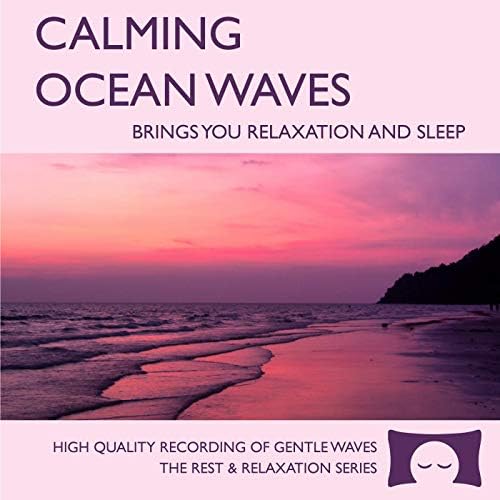
- Audio swap: use calming music or narrated stories for 30–45 minutes (sleep timer on).
- Worry offload: set “worry time” earlier in the evening or write a brief to‑do list to park concerns before bed—evidence‑based CBT‑i strategy adopted in NHS resources.
- Phone placement: Charge outside the bedroom or across the room; cohort data show that habitual pre-bed screen use correlates with shorter sleep and worse quality.
Why it converts sceptics
Digital detox trials show even partial reductions in smartphone access can improve sleep and wellbeing; practical nudges (timers, app limits, charging away from bed) help make the change stick.
Read more about Digital Detox
Environment devices for air quality & humidity
The best evening routine fails if your room fights you all night. Smart environment devices—quiet fans, CO₂ monitors, air purifiers, humidifiers/dehumidifiers, and smart thermostats—can transform sleep by keeping the air fresh, temperature stable, noise low, and humidity balanced.
Ventilation & CO₂
A recent synthesis (ASHRAE project 1837-RP) recommends keeping bedroom CO₂ levels below 1,000 ppm—and ideally below 800 ppm—to protect sleep quality, suggesting that many homes may require higher overnight outdoor air supply rates than current legacy standards.
ASHRAE briefs and reviews note widespread inadequate bedroom ventilation, CO₂ often ranging 430–2600 ppm, and call for improved indoor environmental quality (IEQ) in sleep spaces.
Temperature & humidity
Analyses of bedroom conditions show that warmer temperatures and higher humidity correlate with lower sleep efficiency. Practical ranges commonly cited by building/sleep organisations are ~17–20°C and 40–60% relative humidity (adjust to personal comfort).
Balanced humidity supports nasal comfort and reduces coughs or congestion; HVAC guidance suggests 40–60% RH as the sweet spot, warning that dry or muggy air disrupts rest.
Noise and darkness
WHO night‑noise guidance recommends <40 dB(A) outdoors at night and ~30 dB(A) in bedrooms to prevent sleep disturbance. Combine soft sealing, earplugs, or sound‑masking (low volume) with blackout shades for light control.
The device checklist (reader‑friendly)
- CO₂ monitor: spot overnight buildup; aim <800–1000 ppm, and crack a window or run quiet mechanical ventilation if you exceed this.
- Smart thermostat: schedule a pre‑bed cool‑down to ~18–20°C; stabilise overnight.
- Humidifier/dehumidifier: keep 40–60% RH; avoid extremes to protect airways and sleep comfort.
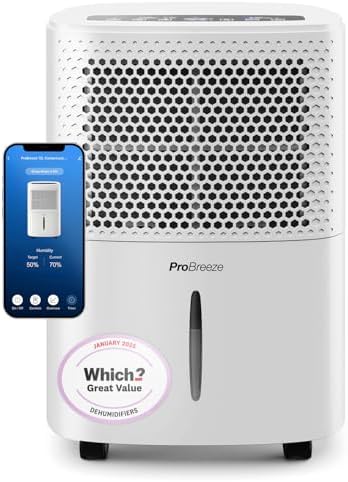
High Moisture Removal
Ultra-Quiet Operation
Smart App & Voice Control
Auto Humidity Control
24-Hour Timer & LED Display
Large Tank & Continuous Drainage
- Air purifier (HEPA): filters particulates but does not add fresh air; pair with ventilation for best results.

- Quiet fan: improves airflow and provides gentle sound masking at low volume. Use a timer to prevent it from running too cold overnight.
- Blackout blinds & draft control: to meet WHO noise/darkness guidance targets as closely as possible in your setting.
Your 7‑step, tech‑smart evening routine (60–90 minutes)
Goal: Lift melatonin naturally, reduce arousal, and keep the room sleep‑friendly—using technology on your terms.
- Wind‑down alarm (60–90 min before bed). Enable Do Not Disturb. Put your phone outside the bedroom (or across the room).
- Adjust lighting: switch to warm, dim lights; avoid overhead bright LEDs. If you must look at a screen briefly, use night mode + lowest brightness.
- Ventilate & set climate: aim ~18–20°C, 40–60% RH; run a quiet fan or ventilation if CO₂ tends to rise overnight.
- Swap scrolling for audio: select calming music (60–80 bpm) or a sleep story (timer 30–45 min, low volume).
- Analogue wind‑down: printed book, journaling, light stretches, or a warm shower. NHS resources emphasise a consistent routine and a screen‑free hour.
- Park worries: 3–5 minutes to jot tomorrow’s tasks; close the notebook and let the audio carry you into sleepiness.
- Lights out: room dark, quiet, and cool; use earplugs or gentle sound-masking if needed (keep volume at a modest level). WHO guidelines support low noise levels for undisturbed sleep.
A science-backed, 14‑day challenge you can start tonight
Days 1–3:
- Set a wind‑down alarm 75 minutes before bed.
- Move your charger outside the bedroom.
- Use calming audio (timer 30 minutes), and paper reading only.
Days 4–7:
- Measure CO₂ one night; if >1000 ppm, increase ventilation.
- Stabilise temperature ~18–20°C, check humidity 40–60%.
Days 8–10:
- Replace bright overheads with warm, dim lamps.
- If unavoidable device use, set Night Mode (warmest) + minimum brightness for brief checks only.
Days 11–14:
- Try pink noise or narrated stories and judge how you feel on waking (use a simple sleep diary).
- Keep volumes low; aim for a consistent routine and a no‑scroll hour every night.
Final thoughts
You don’t need a perfect life to enjoy better sleep by tech. You need small, consistent cues: dimmer, warmer light; calmer audio; fewer dopamine spikes; fresher, quieter air. Combine these blue light evening routine principles with sleep hygiene basics, and you’ll stack the odds in your favour—night after night
FAQ: Tech and sleep tips—your top questions answered
Does Night Shift (or Android Night Mode) make a real difference?
It reduces blue light, which helps—but brightness still matters. Studies show that melatonin remains suppressed at high screen intensities, even with warmer colour temperatures. If you absolutely must look, use the warmest setting and drop brightness to the minimum, briefly. Better yet, avoid screens in the last hour.
What about blue‑light glasses?
Systematic reviews/meta‑analyses suggest mixed, modest effects on objective sleep outcomes; they may help some individuals, but evidence is not consistently strong. Prioritise screen curfews and dim ambient lighting first.
Are white/pink noise apps safe?
At low volumes, they can mask unpredictable noise and help some sleepers; results are mixed, and too‑loud playback may fragment sleep. Consider pink noise if white sounds harsh, and use a timer rather than all‑night continuous playback.
Is music better than noise?
For many, calming music (slow, simple, instrumental) yields moderate improvements in sleep when used consistently across weeks; narrated stories also help. Choose what your brain finds soothing, predictable, and non‑engaging.
What bedroom climate targets should I aim for?
Common, evidence‑informed ranges for sleep are ~18–20°C and 40–60% RH, plus good ventilation (CO₂ ideally <800–1000 ppm). Keep noise low and light minimal.
I’m a night owl—does this apply to me?
Yes, and perhaps even more. Large adult cohort data show pre‑bed screens reduce sleep duration and quality most in evening chronotypes. A strict no‑scroll hour and stronger ambient dimming can help counter your natural drift.
Is there any point to a digital detox if I cannot go “cold turkey”?
Yes. Even partial reductions (charging outside the bedroom, app time limits, wind‑down alarms) show measurable benefits in sleep and wellbeing. Start small and build consistency.